
PCOS Is Now Called PMOS: Here's What That Actually Means
If you have PCOS, or think you might, you may have already seen the news: as of May 2026, PCOS has an official new name — polyendocrine metabolic ovarian syndrome, or PMOS. This wasn't a quiet rebrand. It came out of 11 years of input from over 22,000 people and was backed by 56 patient and professional organizations, including the Endocrine Society. It affects an estimated 170 million women worldwide, so this is a big deal for a lot of people, and I want to break down what it actually means for you.
Why the old name didn't fit
"Polycystic ovary syndrome" implies you need cysts on your ovaries to have it. You don't. It also frames this as an ovary problem, when really it's a whole-body metabolic and endocrine condition that happens to show up in your cycle. The old name obscured that, which meant a lot of women got diagnosed late, bounced between specialists, or were told their labs looked "fine" because nobody was looking at the full picture.
Both names are going to be in circulation for a while — the full transition, including official diagnostic coding, isn't expected until 2028. So don't be surprised if your doctor still says PCOS. Same condition, better name.
How to know if this is you
A few hallmark signs show up again and again:
Insulin resistance is extremely common — somewhere between 50 and 70% of women with PMOS have some degree of it, even when their fasting glucose looks normal. (More on why that happens in a second.)
Elevated androgens are another hallmark, and facial hair is one of the more common ways this shows up.
Irregular or delayed periods are often the first thing people notice. If your cycles are consistently landing more than 35 days apart, that's a signal you're not ovulating on a predictable schedule — or not ovulating that cycle at all. Delayed ovulation usually traces back to inflammation, stress, or the same insulin and androgen signaling issues driving everything else. (I'm doing a mini episode just on how to actually tell if you're ovulating — keep an eye out for that one if you're trying to figure out where you stand.)
Why metabolic health is the lever that moves everything else
Here's the thing about PMOS: it's rarely just about your ovaries, and it's rarely just about your hormones in isolation. Most women see the biggest shifts — in androgens, in cycle regularity, in how they feel day to day — by improving metabolic health first. That's because insulin, blood sugar, and inflammation are upstream of a lot of what gets labeled as "just a hormone problem."
Three things make the biggest difference, in my experience:
Supporting stable blood sugar through diet and lifestyle changes — not spiking and crashing all day, which keeps insulin elevated and androgens along with it.
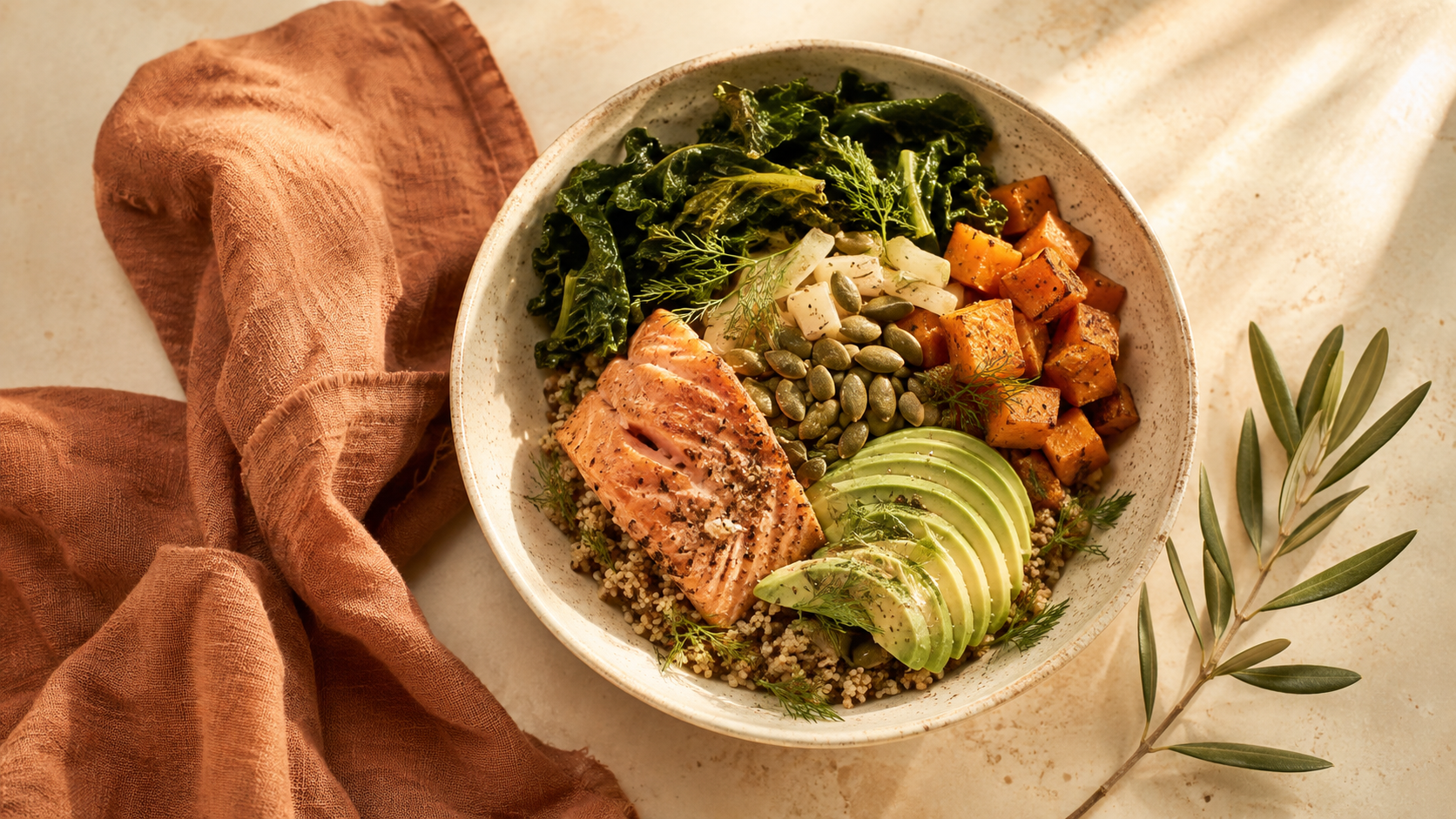
Eating a whole food diet that's protein- and fat-forward, with plenty of fiber. This isn't about restriction. It's about giving your body what it needs to keep blood sugar steady without the swings that come from a diet heavy in refined carbs and low in protein.
Improving gut health to support a diverse microbiome and lower overall inflammation. This one deserves its own explanation, because it's the piece that gets skipped the most.
The gut connection nobody talks about
Your gut bacteria play a direct role in insulin resistance. The right balance of bacteria supports insulin sensitivity — the wrong balance, or an underlying inflammatory process, makes resistance worse. Diet that supports short-chain fatty acid production (think fiber-rich, plant-diverse meals) is one of the most underrated levers for metabolic health, full stop.
What this means practically: improving your gut health isn't just a digestion thing. It can directly support more regular ovulation and more predictable periods, because it's working on the same insulin and inflammation pathways that are driving the irregularity in the first place. (I get into the insulin piece specifically — including why it so often gets missed at a standard doctor's visit — in another upcoming mini episode, so keep an eye out for that too.)
Where to go from here
This is a lot of information, and it's meant to be a starting point, not a diagnosis. If you've been told your labs are "normal" but you still don't feel right, or you've tried the generic advice and nothing's moved the needle, that's usually a sign you need a more complete picture — not more willpower.
Want a clear next step? Grab our free "I've Tried Everything" audio guide — it walks through exactly what to look at when the standard approach hasn't worked for you.